Your Specialist in Insulation & Sealing and Protection Solution

Focus on heat shrink tube, cold shrink tube, wire and cable identification labels, Volsun Electronics is your ideal choice for industry insulation, sealing and protection.

Press Release

Technology Knowledge

Events

FAQ

  • Opens in new window
  • Opens in new window
  • Opens in new window

What is EPDM Cold Shrink Tube?
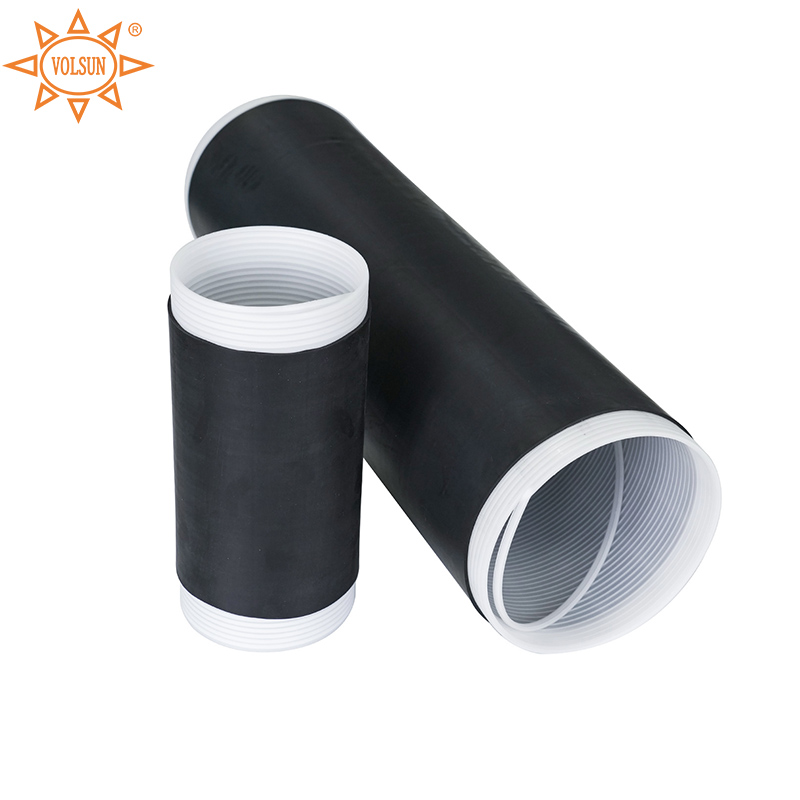


EPDM cold shrink tube is an insulating and protective component made of EPDM (Ethylene Propylene Diene Monomer) rubber as the raw material. It is pre-expanded, shaped and matched with a support tube, relying on the "elastic memory" characteristic of rubber. During construction, the support tube can be pulled out to allow the tube to shrink naturally, tightly wrapping the protected part. No heating tools are needed, realizing insulation, waterproofing and dustproof sealing. It is a common material in the industrial protection field. With a stable molecular structure, it has excellent weather resistance, flame retardancy and cost-effectiveness, suitable for most conventional working conditions.

What are the differences between EPDM cold shrink tube and silicone rubber cold shrink tube?


  • What is the difference in temperature adaptation range?

Volsun EPDM cold shrink tube has a stable operating range of -40℃~90℃, which can cope with conventional high and low temperature environments and meet the needs of daily outdoor protection. Volsun silicone rubber cold shrink tube, on the other hand, has the advantage of an ultra-wide temperature range, capable of long-term stable operation at -60℃~200℃. Its performance does not degrade in scenarios such as extreme cold and heat, and around high-temperature equipment, making it the only choice for high-temperature working conditions.
  • What are the differences in mechanical and environmental resistance properties?

EPDM has an elongation at break of ≥600% and a tear strength of ≥25kN/m, with outstanding UV resistance and salt spray resistance, making it a "specialist" for outdoor use. Silicone rubber has an elongation at break of over 800% and a tear strength of ≥35kN/m, with better elasticity and fatigue resistance. It also has strong oil resistance and chemical corrosion resistance, suitable for high-frequency vibration and complex chemical environments.
  • What are the typical application scenarios for each of them?

EPDM is suitable for outdoor scenarios such as 5G base stations, photovoltaic power stations and substations, focusing on long-term weather resistance and safety. Silicone rubber is adapted to extreme working conditions such as new energy vehicle motor compartments, high-temperature production lines and engineering machinery, ensuring the reliability of protection in harsh environments.
  • What other differences are there between the two besides performance and applications?
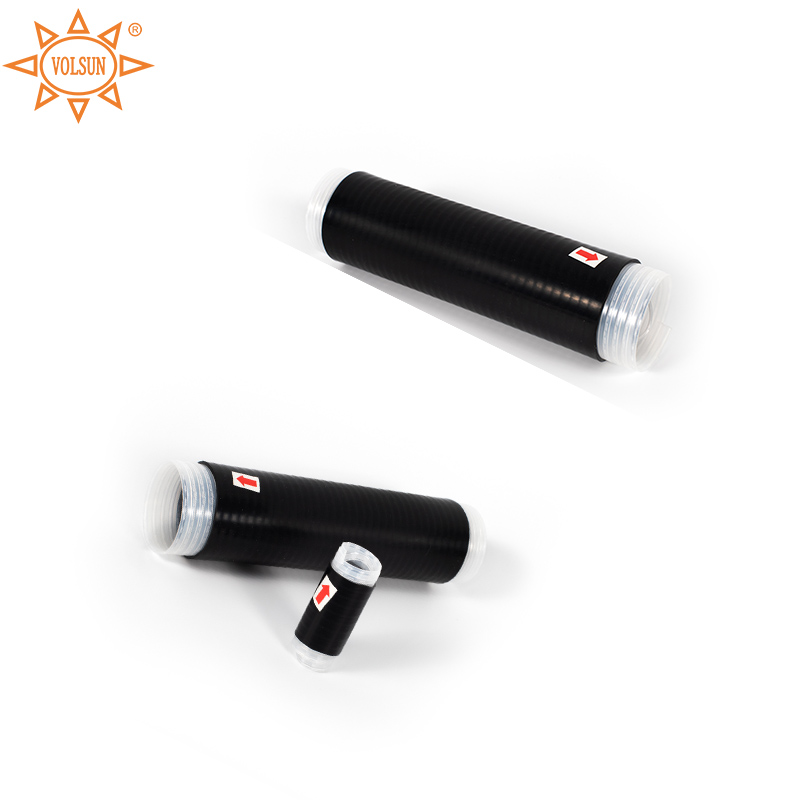
In addition to the performance and applications that we are most concerned about, there are slight differences between the two in terms of cost and positioning. Volsun EPDM cold shrink tube has excellent cost-effectiveness, with controllable raw material and process costs, making it an economical choice for conventional scenarios. Volsun silicone rubber cold shrink tube has a higher price due to scarce raw materials and complex processes, but its top-level performance is suitable for the protection of key parts, belonging to a "performance insurance type" choice.


Installation and Selection Suggestions


Both have consistent installation convenience and neither requires heating. The core of selection lies in the working conditions: choose Volsun EPDM cold shrink tube for conventional outdoor use and cost-effectiveness; choose Volsun silicone rubber cold shrink tube for extreme temperature ranges and complex working conditions.


  • Opens in new window
  • Opens in new window
  • Opens in new window
Return Top Contact Return Boot