Sizing cold shrink tubing is simpler than it looks: it comes down to two numbers on the datasheet. The expanded ID must clear the biggest thing you cover, and the recovered ID must grip the smallest. Get either wrong and the tube either will not slide on or will not seal — and because cold shrink cannot be re-stretched once activated, you measure once and order right. This guide walks through the 4-step method, a worked example, and how VOLSUN sizes map to real cables.
Why Sizing Matters
A cold shrink tube that is too small will not go over the connector or jacket. One that is too large will not grip, so it creeps, lifts, and lets water in at the very joint you were sealing. There is no second chance — pulling the support core is permanent. Correct sizing is what turns a rubber sleeve into a 10-year seal.
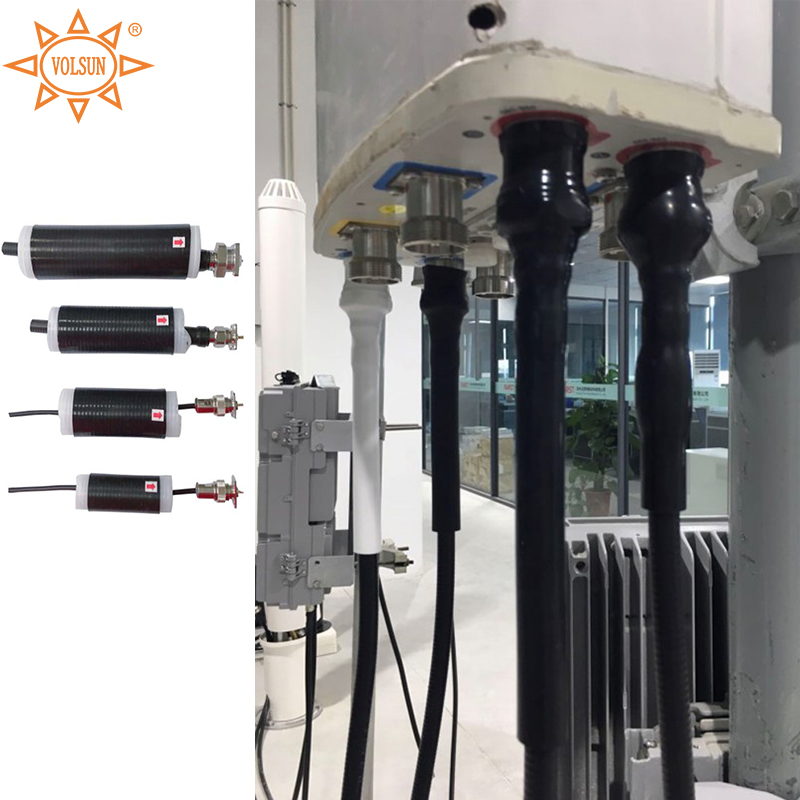
The Two Numbers on the Datasheet
| Number | What it means | Sizing rule |
| Expanded ID | Tube diameter while on the support core (before shrink) | Must be larger than the largest diameter you cover |
| Recovered ID | Tube diameter at rest (after shrink) | Must be smaller than the smallest diameter you cover |
The gap between them is the shrink ratio (about 4:1/5:1) — how much the cold shrink tube can close. Pick a ratio that comfortably spans your measured range.
How to Measure Your Cable (4 Steps)
- Measure the cable OD with a caliper — outer diameter, not the conductor.
- Measure the connector, if any, at its largest dimension (usually across the flats or over the shoulder).
- Take the max and the min — max is what the tube must clear; min is what it must grip.
- Add a grip margin (roughly 10–20%) so the recovered ID sits below the smallest diameter for a firm seal.
Worked Example
A cable with OD 12 mm terminates in a connector 18 mm across the flats:- Largest diameter to clear = 18 mm → expanded ID must be > 18 mm
- Smallest diameter to grip = 12 mm → recovered ID must be < 12 mm
Common Sizing Mistakes
- Measuring diameter instead of OD and ordering a cold shrink tube that will not fit.
- Sizing to the cable only and forgetting the connector body is wider.
- Skipping the grip margin, so the seal is loose.
In short, size cold shrink from two numbers: expanded ID clears the biggest section, recovered ID grips the smallest, with margin. Not sure of your numbers? Send VOLSUN your cable OD and connector drawing for a matched size or a custom tube.
Need a sample or quote? Contact the VOLSUN team or download the datasheet.
- CONTACT TEL: +86-512-66386808
- SALES CONTACT: volsun2006@szvolsun.com