Shaft Grounding Ring FAQs: Causes of Shaft Voltage, Bearing EDM Damage, and Proven Protection for VFD Motors
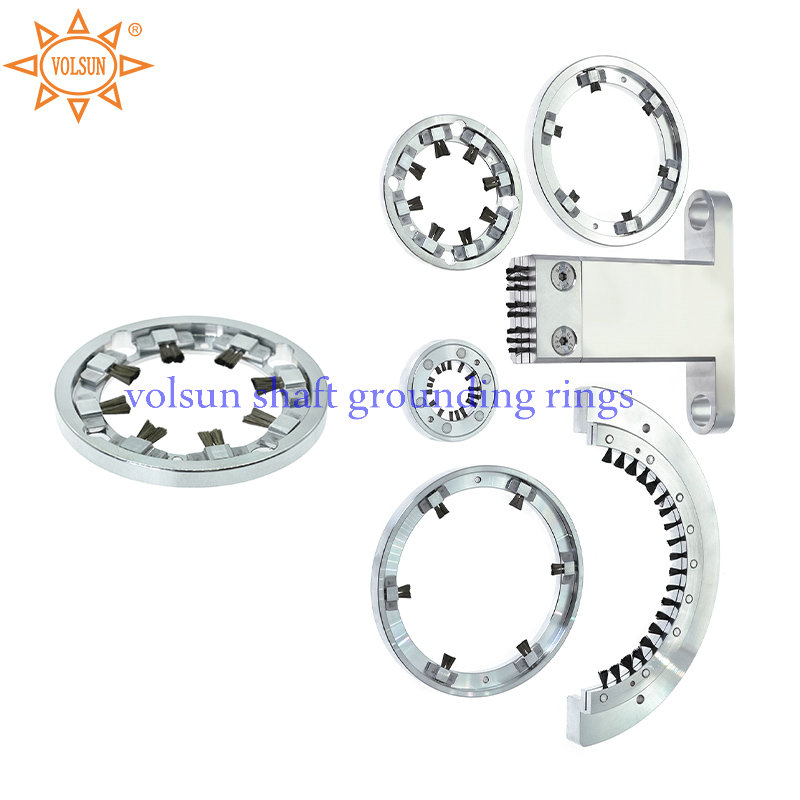
FAQ 1: What is a shaft grounding ring and what problem does it solve?
A: A shaft grounding ring is a conductive device installed on the motor shaft to safely discharge shaft voltage caused by variable frequency drives (VFDs). In modern PWM-controlled motor systems, high-frequency common-mode voltage couples through parasitic capacitances and accumulates on the shaft. Without a controlled discharge path, this voltage repeatedly breaks down the bearing lubricant film, causing electrical discharge machining (EDM) damage. A shaft grounding ring works by creating a low-impedance, continuous electrical path from the rotating shaft to the motor frame, preventing destructive current from passing through the bearings and significantly extending bearing life.
FAQ 2: Why do VFD-driven motors have a higher risk of shaft current?
A: VFD-driven motors are more susceptible to shaft current because the fast switching speed and high dv/dt of PWM signals generate strong common-mode voltages. These voltages are capacitively coupled from the stator to the rotor, where they accumulate on the shaft. As switching frequency increases and cable length grows, the shaft voltage rises in both magnitude and repetition rate, making bearing insulation breakdown more likely. Compared to line-fed motors, this electrical environment dramatically increases the probability of EDM damage unless an effective shaft grounding solution is applied.
FAQ 3: How does a shaft grounding ring actually eliminate bearing electrical damage?
A: A shaft grounding ring prevents bearing damage by stopping shaft voltage from reaching the breakdown threshold in the first place. Instead of allowing voltage to build up and discharge through the bearing oil film, the grounding ring continuously drains induced shaft current directly to the motor housing through a low-resistance path. Because the current is diverted away from the rolling elements and raceways, the electrical discharge mechanism responsible for fluting and pitting is eliminated, addressing the root cause rather than just the symptom of bearing failure.
FAQ 4: What is the difference between a shaft grounding ring and a carbon brush?
A: The fundamental difference between a shaft grounding ring and a carbon brush lies in contact stability and long-term reliability. Carbon brushes rely on single-point sliding contact, which creates fluctuating resistance, mechanical wear, dust contamination, and potential sparking. A shaft grounding ring, by contrast, uses a dense array of conductive micro-fibers that maintain 360-degree multi-point contact with the shaft, ensuring consistent low impedance without arcing or maintenance. This makes shaft grounding rings far more suitable for continuous-duty and high-speed motor applications.
FAQ 5: Can insulated bearings replace a shaft grounding ring?
A: Insulated bearings alone cannot replace a shaft grounding ring because they block current without removing shaft voltage. While insulation prevents electrical discharge at one bearing, the accumulated voltage simply seeks another path, often damaging the opposite bearing or connected equipment. A shaft grounding ring actively releases the electrical energy from the shaft, while insulated bearings only redirect it. In high-power or critical applications, the most effective approach is combining an insulated bearing on one end with a shaft grounding ring to both block and safely discharge shaft current.
FAQ 6: Where should a shaft grounding ring be installed for best performance?
A: A shaft grounding ring is most effective when installed as close as possible to the bearing it is intended to protect, typically on the drive end or non-drive end shaft extension. Shorter electrical paths reduce parasitic impedance and improve high-frequency current discharge. Proper mounting, shaft surface cleanliness, and enclosure sealing are also critical, as incorrect installation can significantly reduce grounding effectiveness and compromise long-term reliability.
FAQ 7: Does a shaft grounding ring affect motor efficiency or speed?
A: A properly designed shaft grounding ring does not negatively affect motor efficiency or rotational speed. The conductive micro-fibers apply extremely low contact pressure, resulting in negligible friction and no measurable impact on mechanical performance. Unlike carbon brushes, which introduce noticeable drag and wear, shaft grounding rings are designed to operate continuously throughout the motor’s service life without influencing torque, efficiency, or thermal behavior, even in high-speed applications within their rated limits.
FAQ 8: Which industries benefit most from shaft grounding rings?
A: Industries that rely heavily on VFD-driven, high-duty-cycle motors benefit the most from shaft grounding rings. These include renewable energy systems, rail traction, automation equipment, machine tools, HVAC systems, and electric vehicles. Long operating hours, high switching frequencies, and long motor cables increase shaft voltage risk, making bearing protection through effective shaft grounding essential for reliability and reduced maintenance costs in these sectors.
FAQ 9: Do shaft grounding rings require regular maintenance?
A: Under normal operating conditions, shaft grounding rings are essentially maintenance-free. Because they do not spark, wear rapidly, or generate debris, their performance remains stable over long periods. Periodic inspection may be recommended in environments with heavy dust, moisture, or corrosive atmospheres, but unlike carbon brushes, shaft grounding rings do not require routine replacement or adjustment, significantly lowering total cost of ownership.
FAQ 10: How can I tell if my motor really needs a shaft grounding ring?
A: A motor typically needs a shaft grounding ring if it is VFD-driven and shows signs of premature bearing failure, audible noise, or characteristic EDM fluting patterns. Measuring shaft voltage is the most direct method, and peak values above approximately 5 volts often indicate a high risk of electrical bearing damage. In such cases, simply replacing bearings will not solve the underlying issue, while installing a shaft grounding ring addresses the electrical root cause and improves overall system reliability.
- CONTACT TEL: +86-512-66386808
- SALES CONTACT: volsun2006@szvolsun.com